Dyno Testing – Why We Test
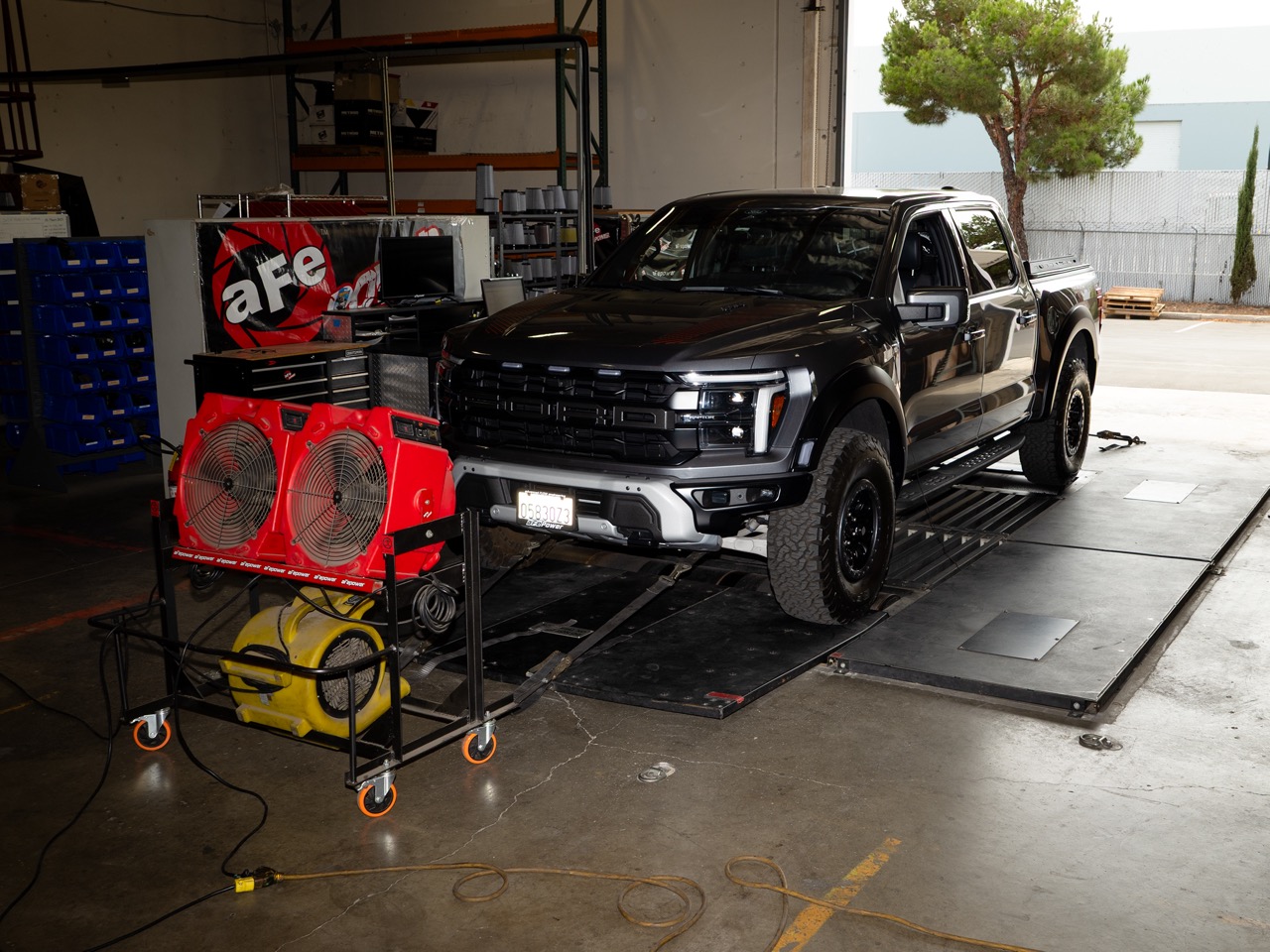
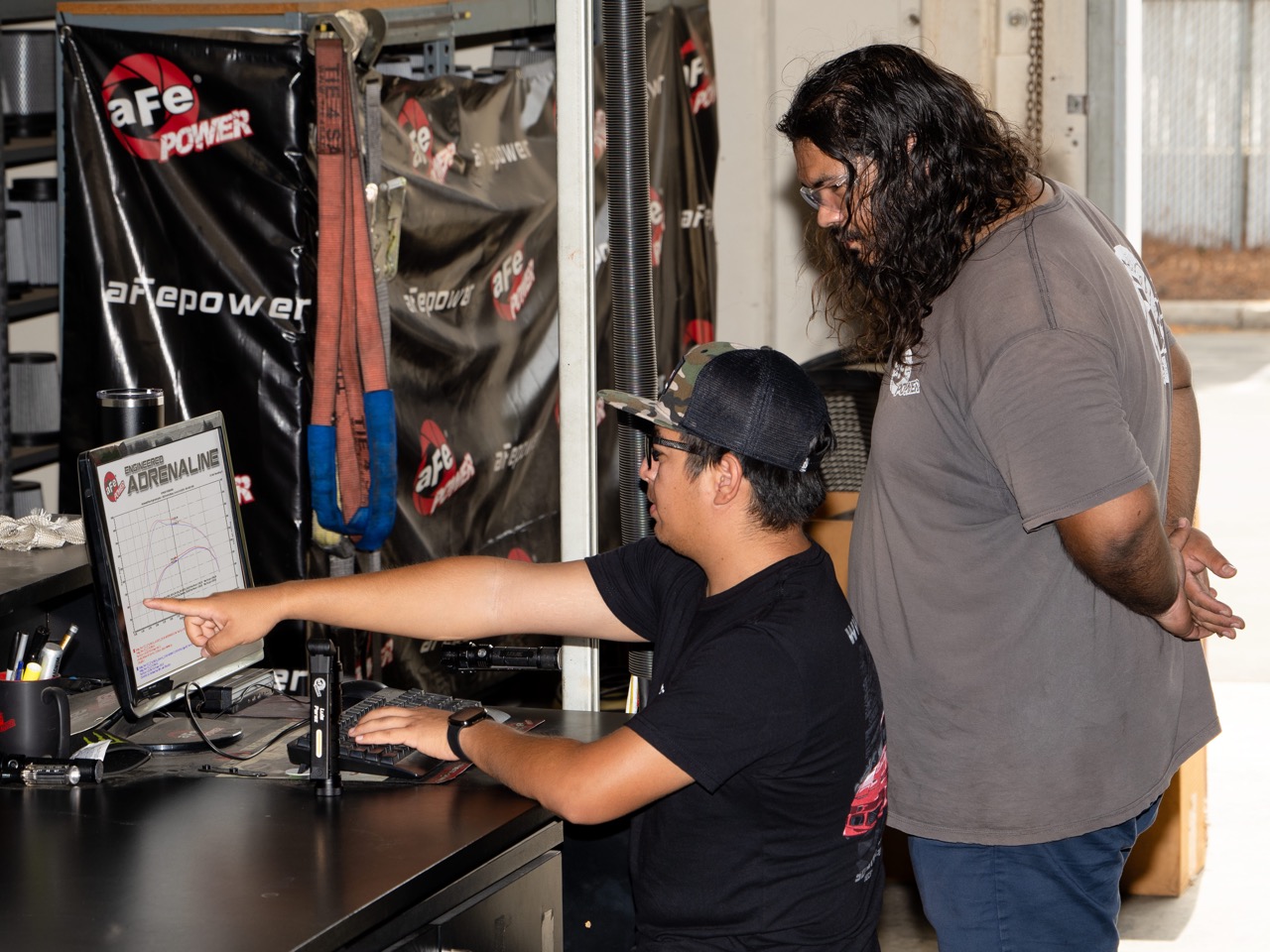
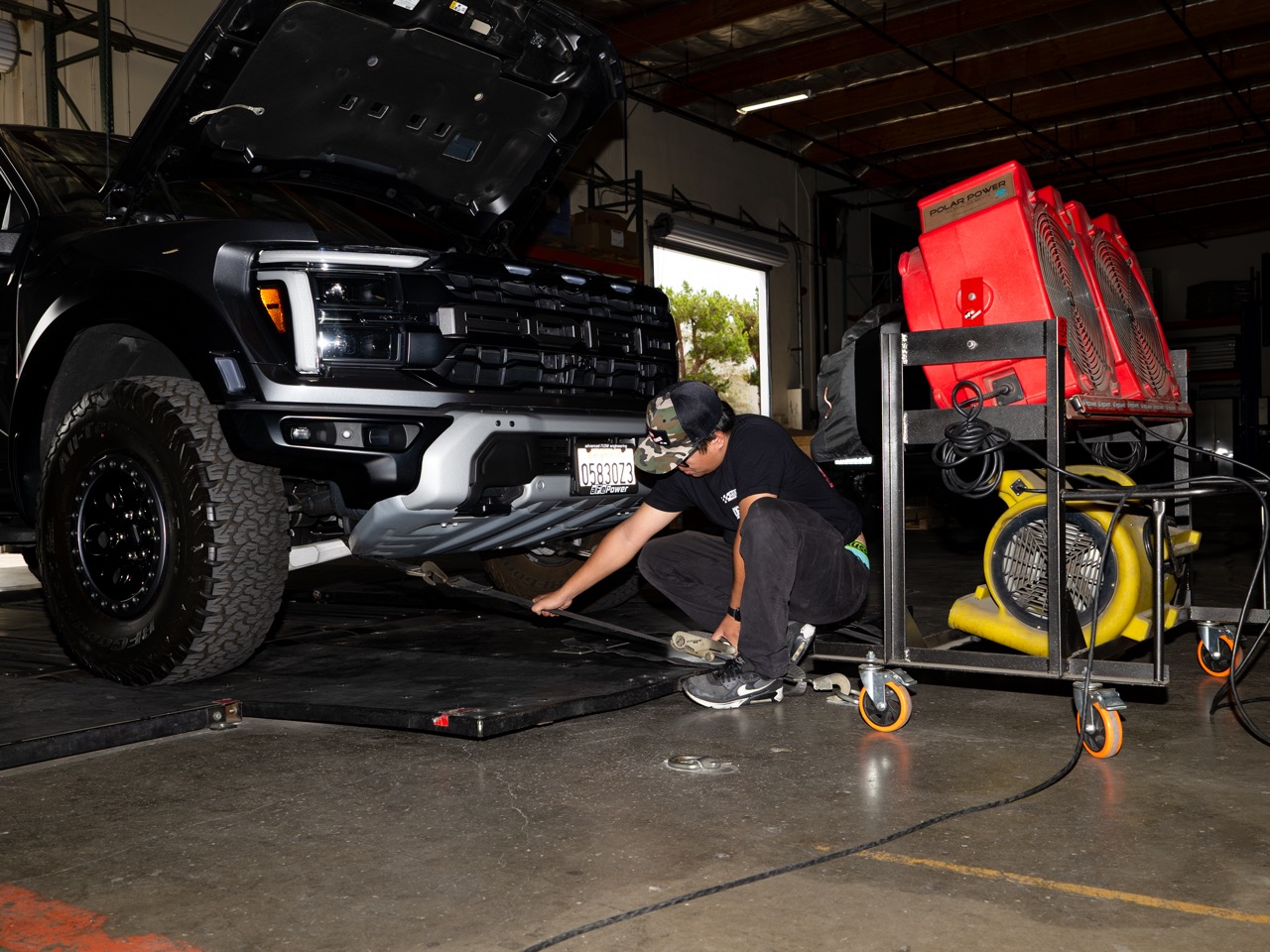
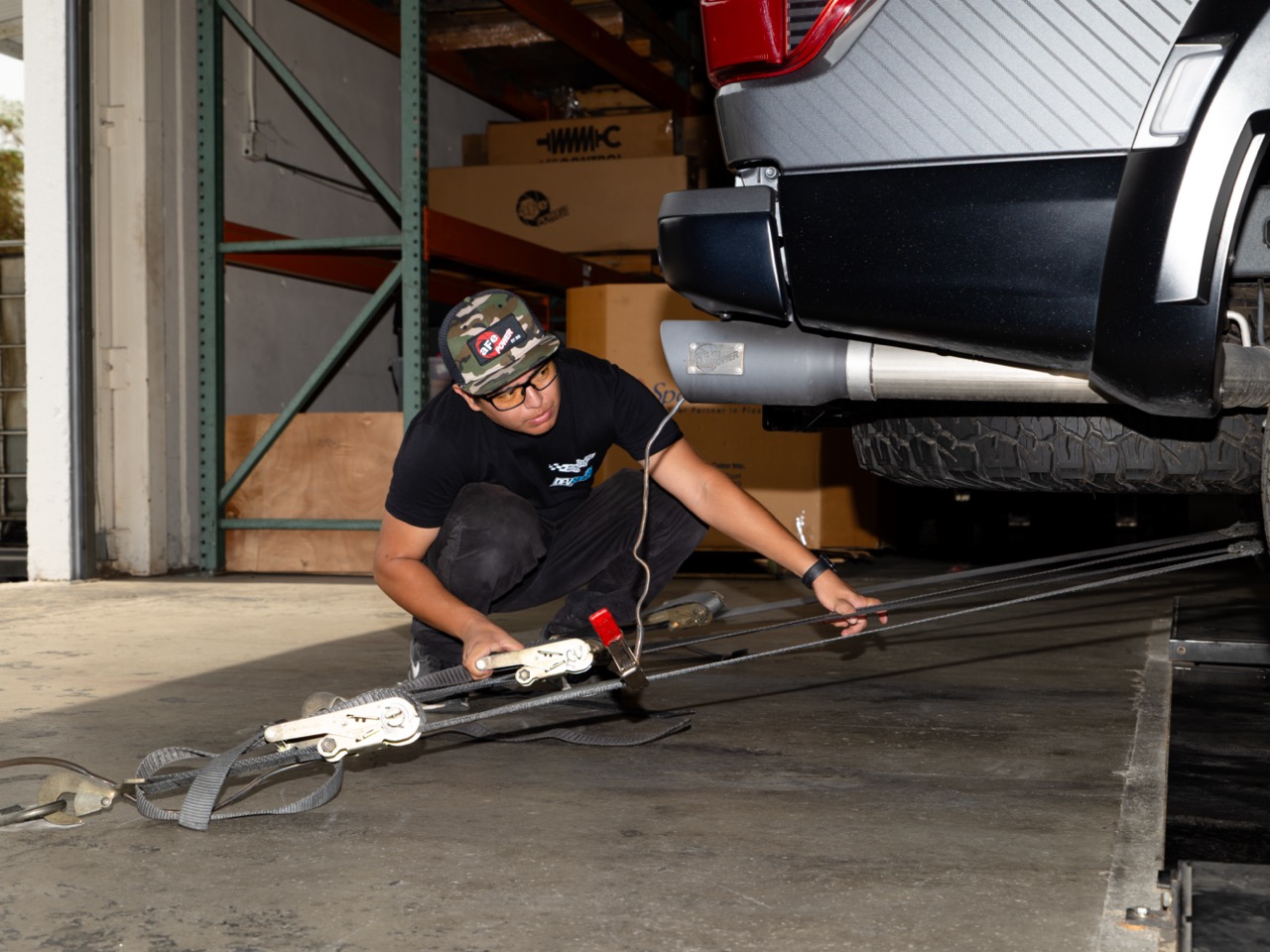
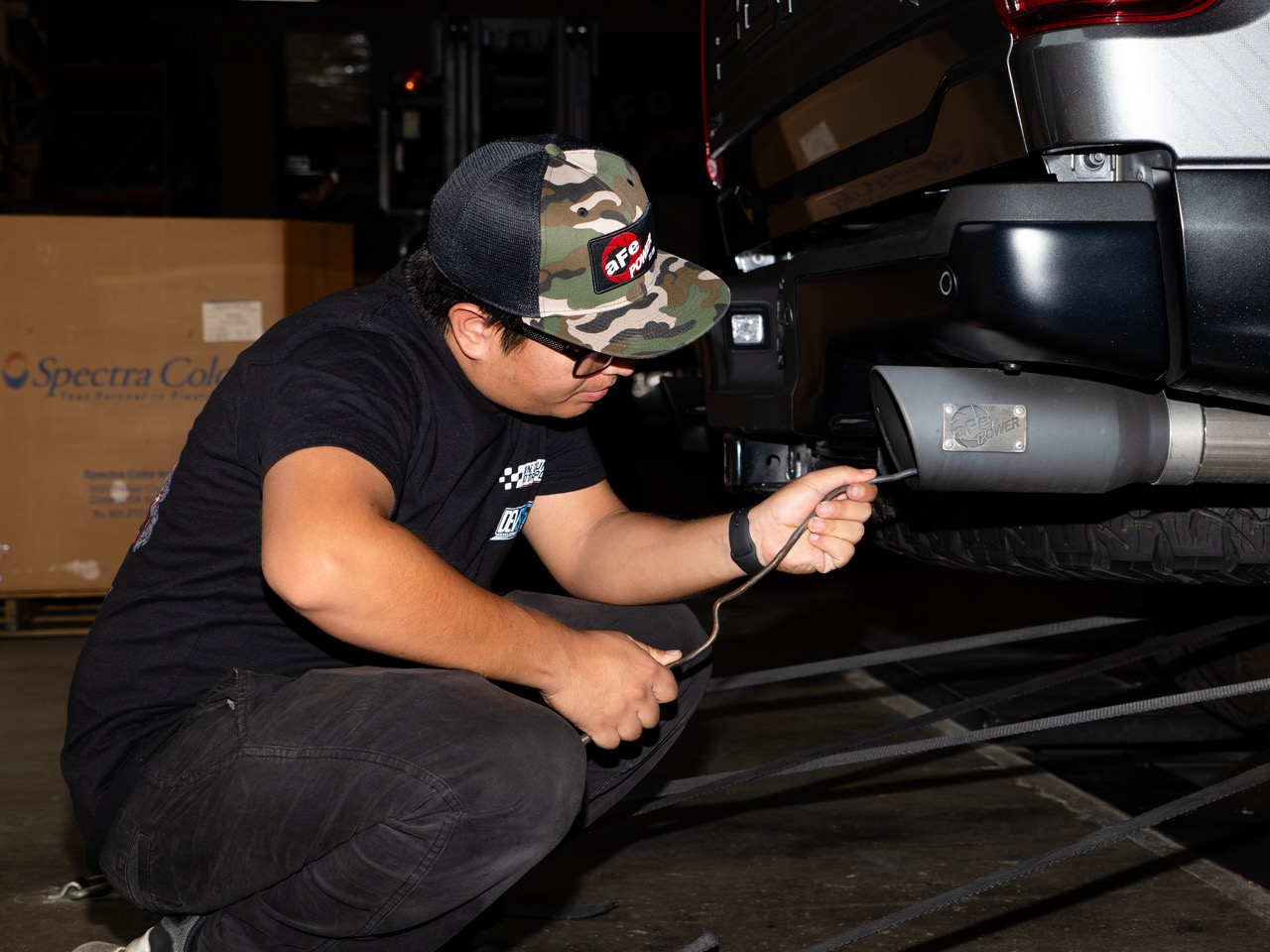
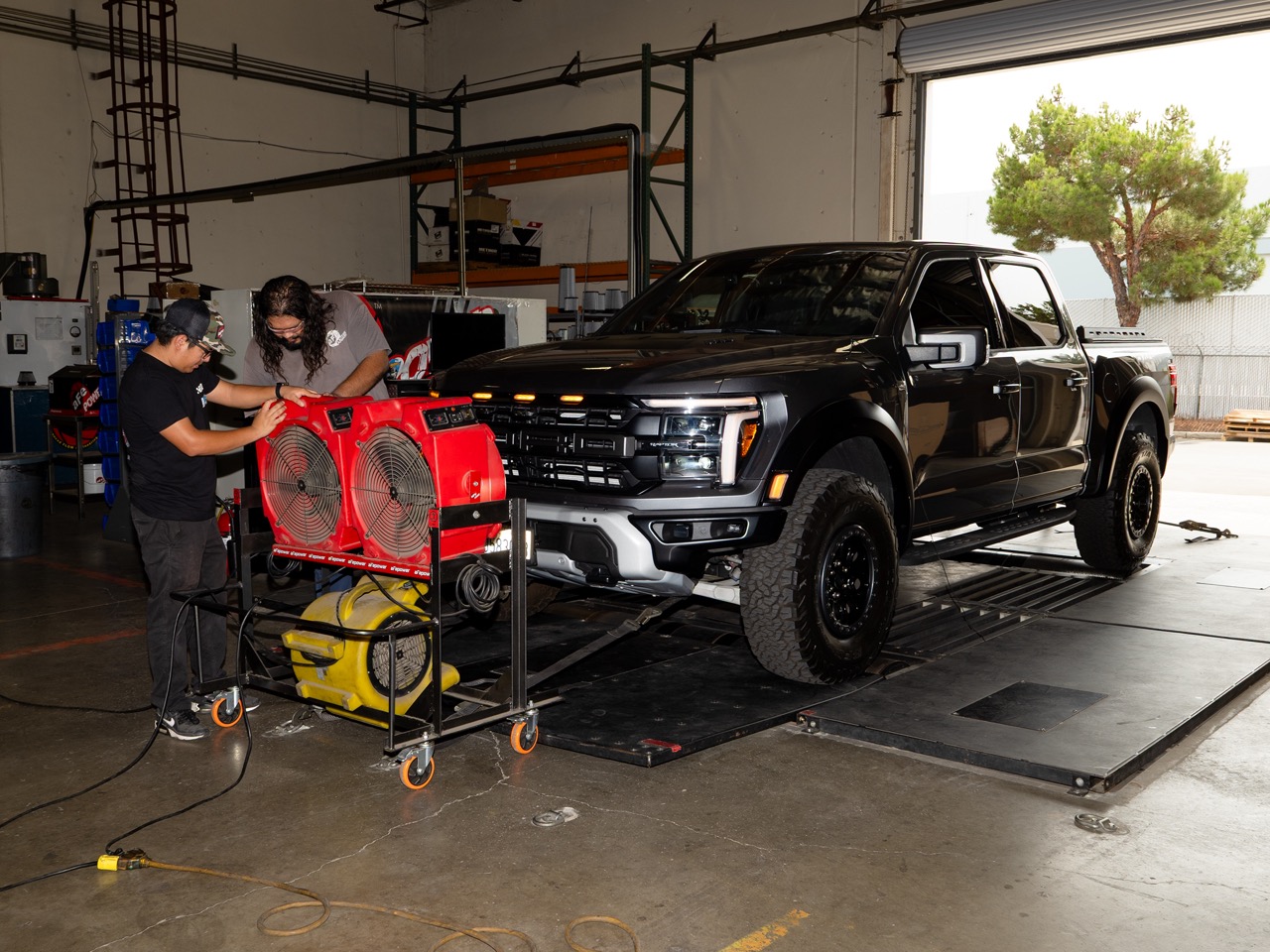
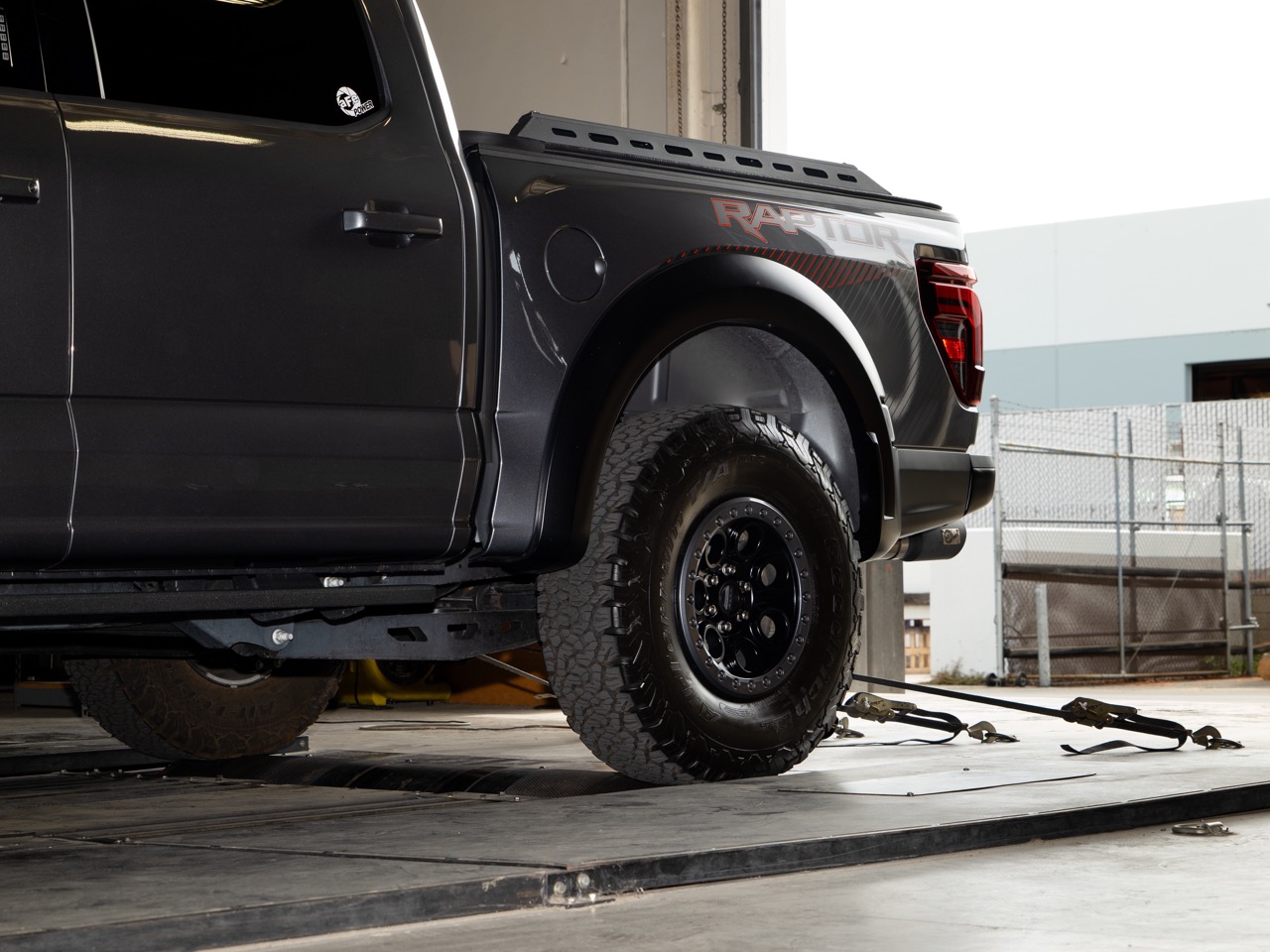
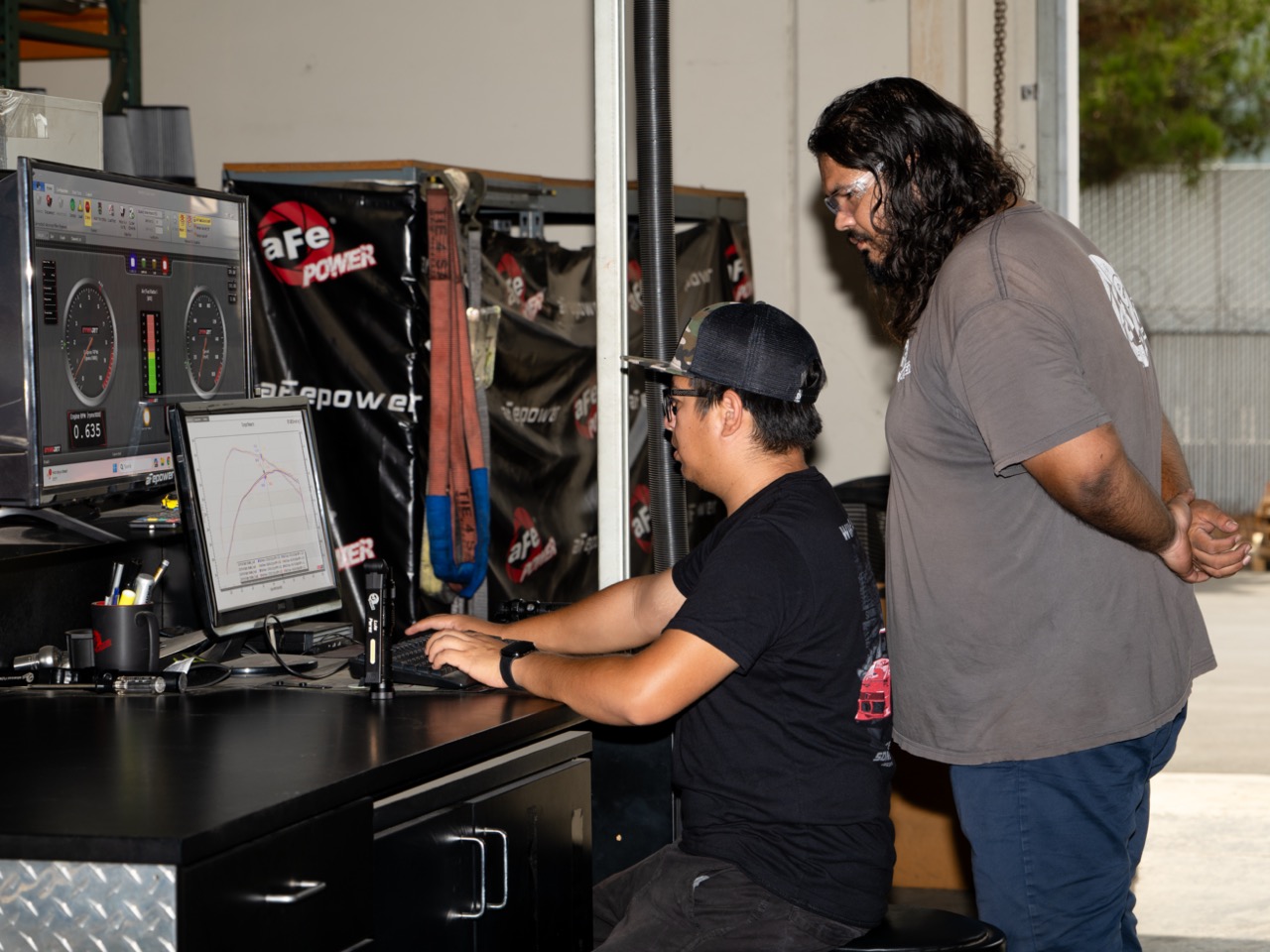
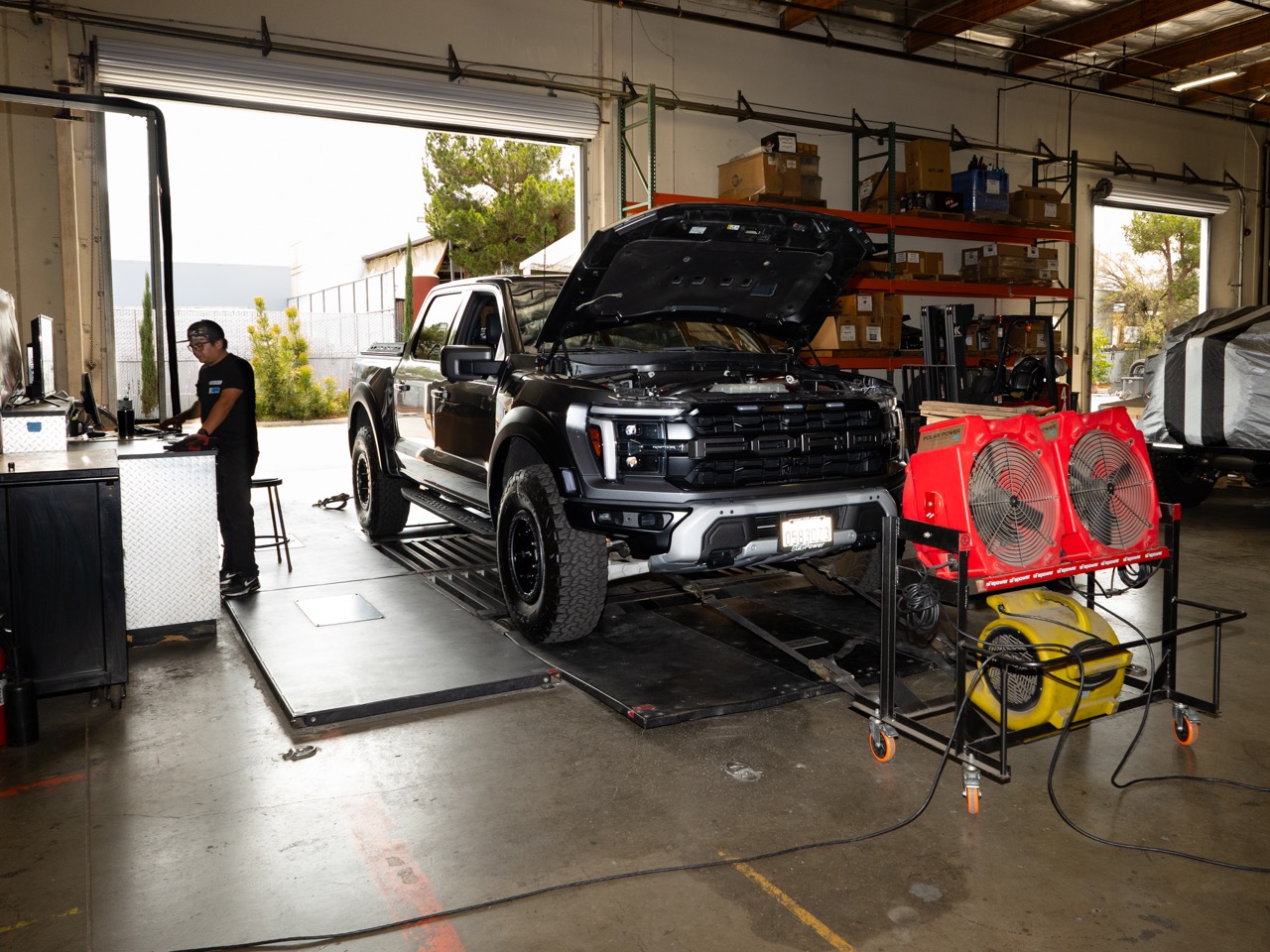
A dyno, short for dynamometer, is a machine that measures the power and torque an engine produces. At aFe POWER, it’s important that we back our horsepower and torque claims with real data so that, before you buy, you know what to expect. Products we dyno test mostly include our Cold Air Intakes and Scorcher Power Modules, and we run them against factory setups to compare the impact of isolated aftermarket upgrades compared to the stock vehicle’s baseline readings. With our products, you will feel a difference on the “butt dyno,” but real data ensures you know that engineering, R&D, and extensive testing went into achieving and verifying these claimed gains. That’s why every air intake system we build is tested on our in-house Dynojet chassis dyno. The power and torque numbers listed on each product page come from that testing.
Crank Power vs Wheel Power
At the crank: Measures power directly at the engine’s crankshaft, before it travels through the drivetrain. Mostly used by engine builders working on the engine in isolation.
At the wheel: Measures power at the wheels. Power coming from the engine is lost at each stage, after it has traveled through the drivetrain: flywheel, clutch, transmission, driveshaft, differential, axles, and wheels. On average, a vehicle loses 15 to 20% of its power from the crank to the wheel. All Wheel Drive vehicles lose slightly more, closer to 20%, due to the additional drivetrain components.
At aFe, the horsepower and torque numbers we provide are at the wheel.
How We Test
aFe Cold Air Intakes go through extensive engineering, R&D, and testing on the dyno and on the road to ensure they deliver verifiable gains safely.
- Baseline testing. The vehicle is completely stock. We run it until we get three consistent baseline runs.
- Prototype testing. We install the prototype intake and run it to see how much power it makes.
- Refinement. The prototype goes through multiple rounds of adjustments, each one aimed at maximizing power without triggering a check engine light or requiring a separate tune.
- Comparison. Each version of the prototype is compared against the stock baseline numbers.
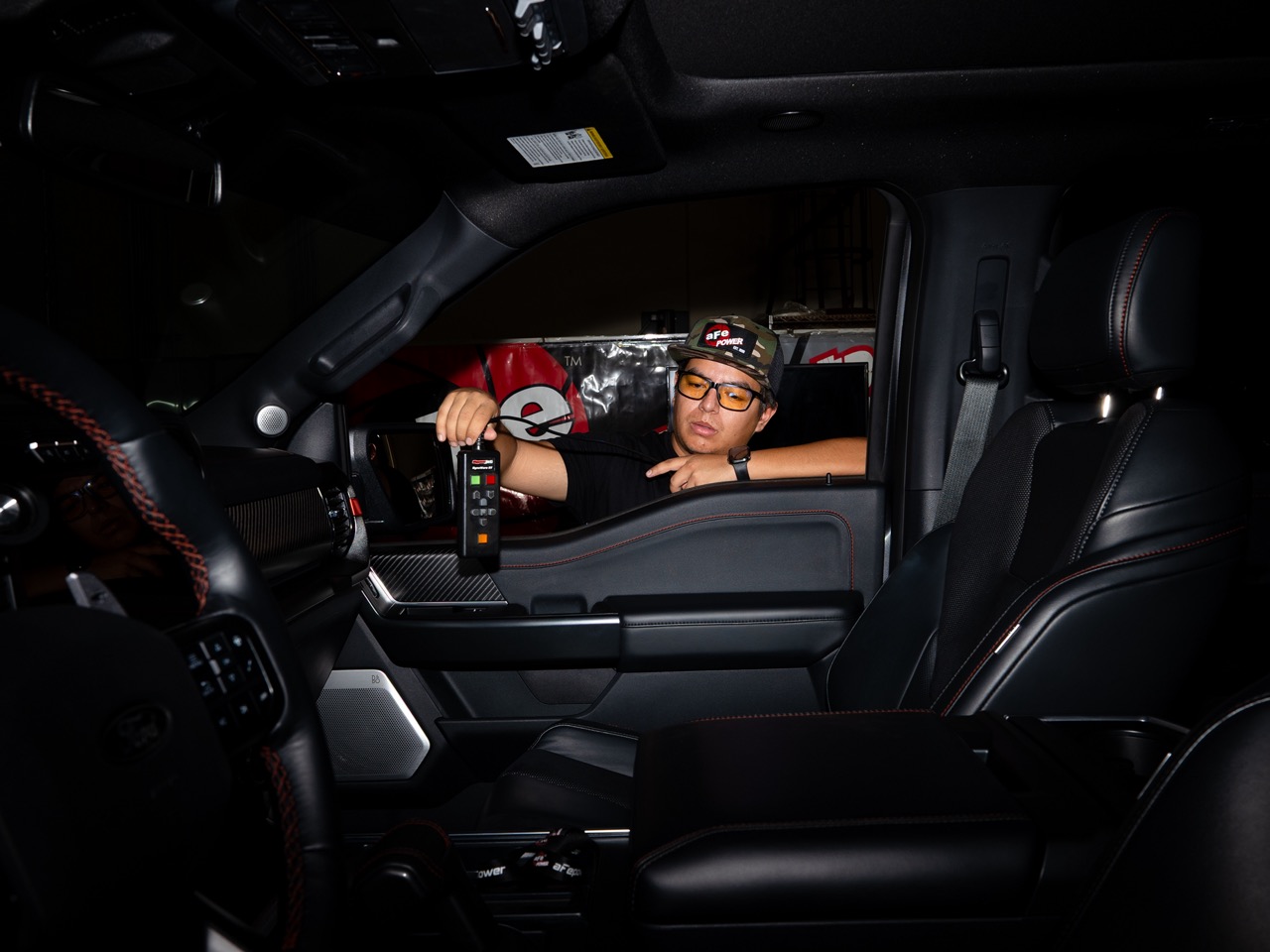
- Real-world adjustment. We monitor various metrics, such as fuel trim and air-fuel ratio, to confirm the vehicle is making power consistent with the dyno results, and then put real miles on it.
- Final testing. Three consistent runs on the final product. We use the average of those three runs as the posted numbers, compared against stock.
We also drive the vehicle in real-world conditions through all key drive cycles, typically 500 to 800 miles, to confirm the results hold up outside a controlled environment and to check for any check engine light.
Power Patterns
- Pro 5R filter media flows more air than Pro Dry S. This shows up in dyno results.
- Open cold air intakes are more exposed to underhood heat. They tend to make more power initially when the engine is cool, but after a few runs, heat soak can make consistent runs harder to get. Sealed intakes are more insulated from underhood heat and tend to produce more consistent runs. Overall, performance numbers vary per intake kit style, vehicle, and filter used.

How To Read A Dyno Chart
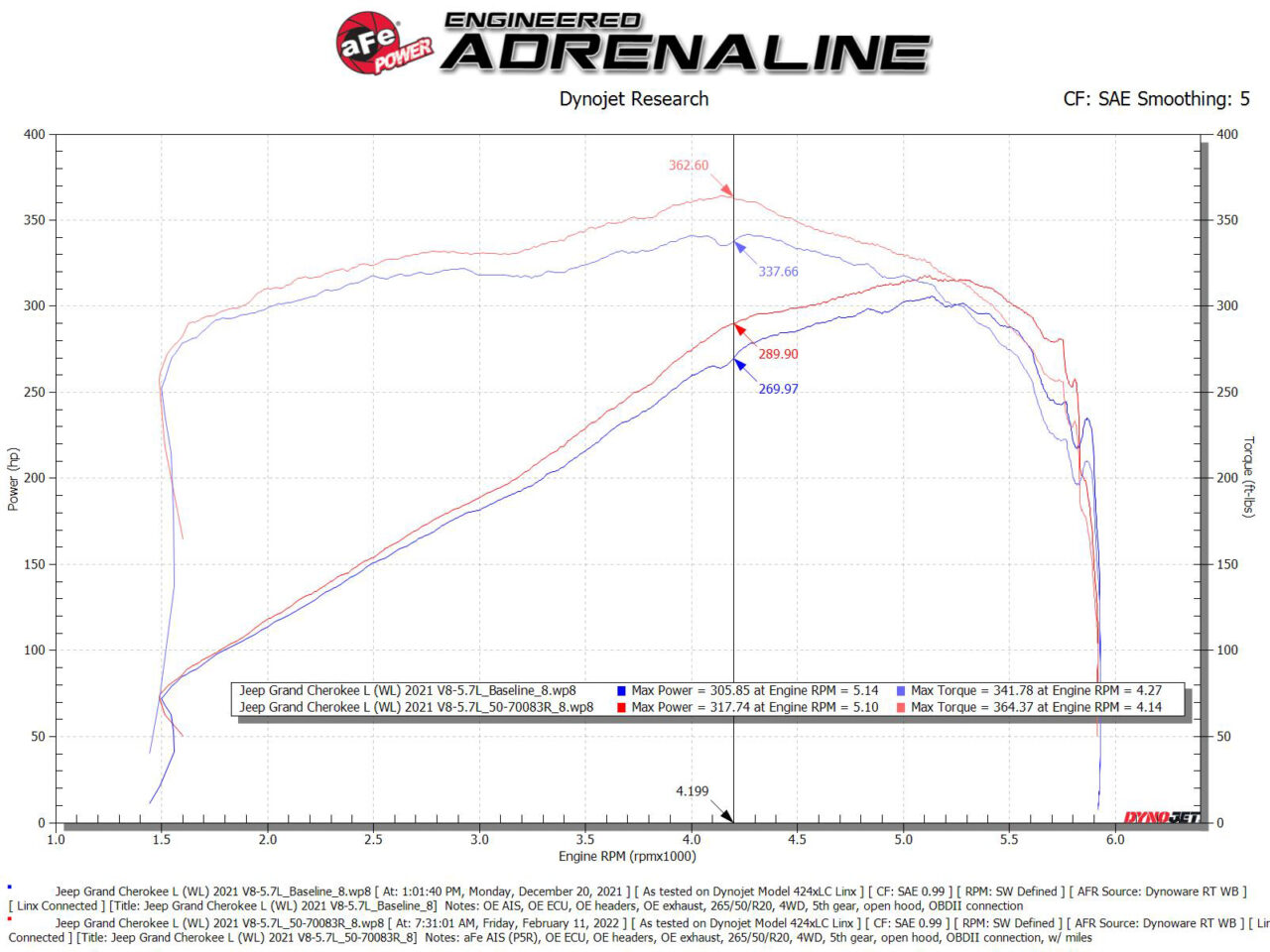
- Horizontal Axis: Engine speed, measured in revolutions per minute (RPM).
- Vertical Axis: Power rating
- Horsepower Curve and Torque Curve: Each chart typically shows two sets of lines, one for horsepower and one for torque. Near the beginning of the RPM range, the lower line represents horsepower, and the higher line represents torque, since torque output is higher at low RPMs. Blue lines typically represent baseline runs, and red lines represent runs with our aftermarket parts installed.
- Power Peaks: The peaks of the lines are where the engine produces its maximum output.
- Annotations and Legend: Labels on the chart show vehicle information, factory vs. aftermarket products installed, test date, peak power values, and weather conditions (temperature and humidity), which affect power output.
Dyno Testing: Essential for Proving Performance
Our POWER Professionals are Here to Help.
-
Call us at 1-951-493-7101 or shoot us an email.
-
We’re available to talk Mon–Fri 8am–4pm PST.
-
Factory Store: 232 Granite St. Corona, CA 92879

All Rights Reserved.