
Why Upgrade to Aftermarket Charge Pipes?
What are Charge Pipes?
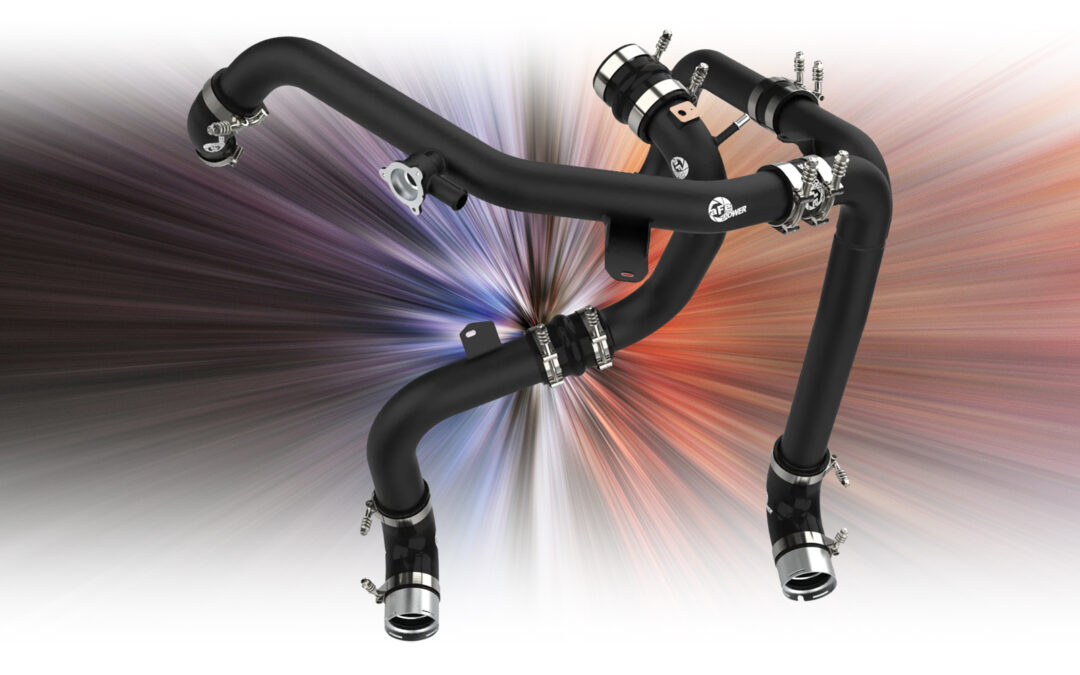
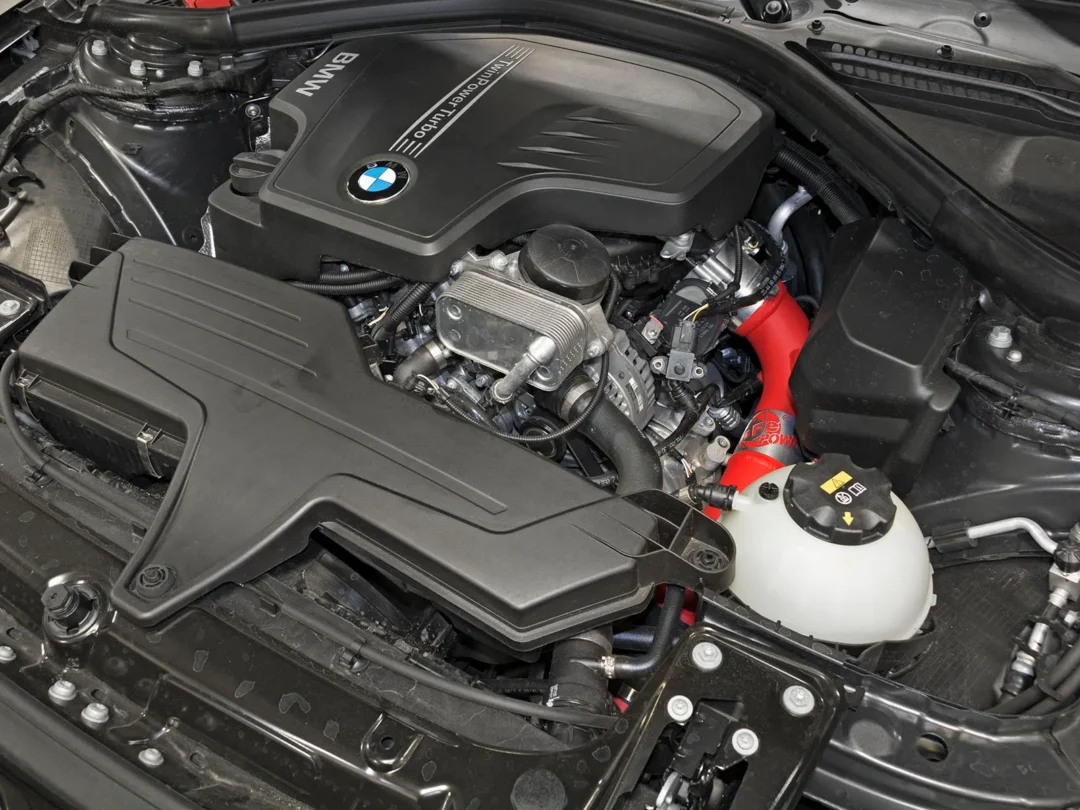
Charge pipes– also known as boost tubes or intercooler pipes– are essential components in turbocharged engines. The hot side directs compressed air from the turbocharger to the intercooler, and the cold side channels air from the intercooler to the engine, more specifically to the intake manifold (for diesel engines) or the throttle body (for gas engines).
The Problem with Plastic & Rubber Charge Pipes
Factory charge pipes are built for cost efficiency, not performance. These stock parts degrade over time and are prone to cracking and leaking, especially under high heat and boost pressure. Vehicles running 20+ PSI of boost are particularly at risk, and diesel trucks, which can see 30–40 PSI from the factory, put even more stress on stock components. When failure occurs, you may face long wait times for OEM replacements, and if the stock part has already failed, that’s a good sign you don’t want to replace it with the same thing.
aFe Aftermarket Aluminum Charge Pipes Vs Factory Plastic or Rubber Charge Pipes
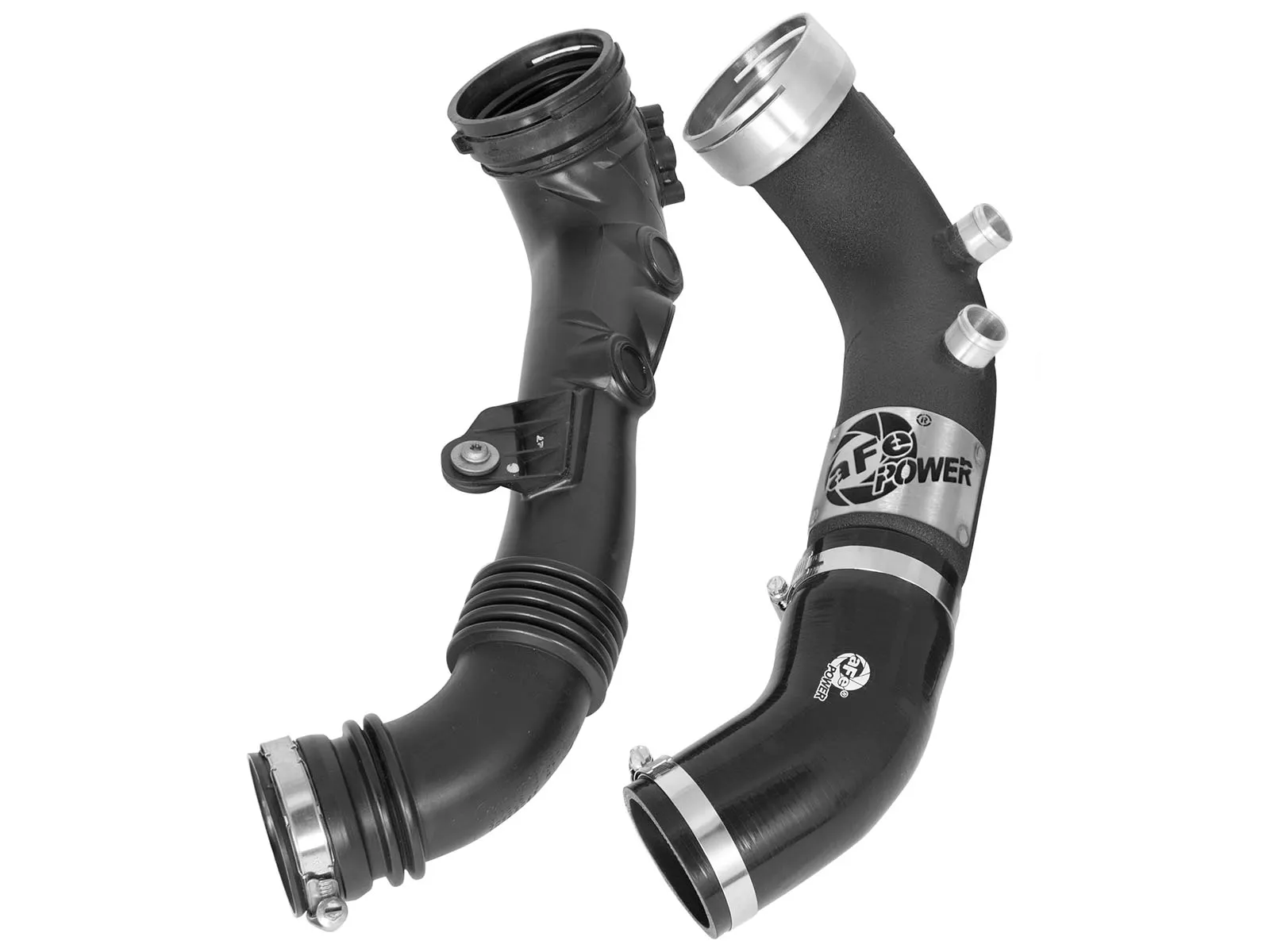
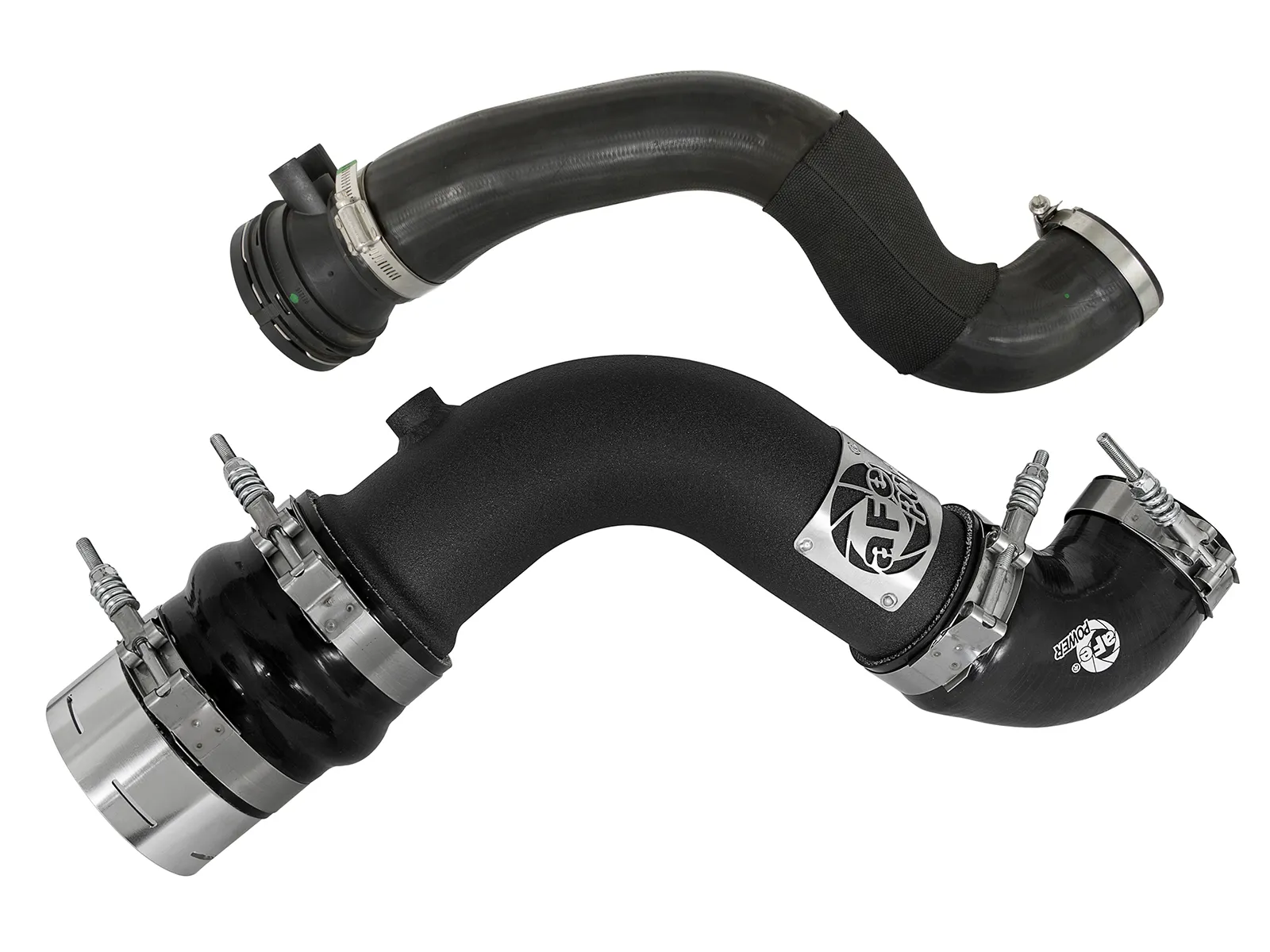
aFe Charge Pipes are engineered with a larger diameter and are made from mandrel-bent aluminum. The increased diameter ensures a consistent cross-section, allowing for more incoming air volume and faster turbo spool. Unlike plastic or rubber tubes, which can swell or deform, aluminum maintains air pressure and durability, preventing pressure drops and improving turbo boost. And with constant airflow, heat soak is not an issue.
Key Benefits:
- Optimized airflow
- Improved turbo spool
- Quicker throttle response
- Better engine efficiency
- Increased reliability
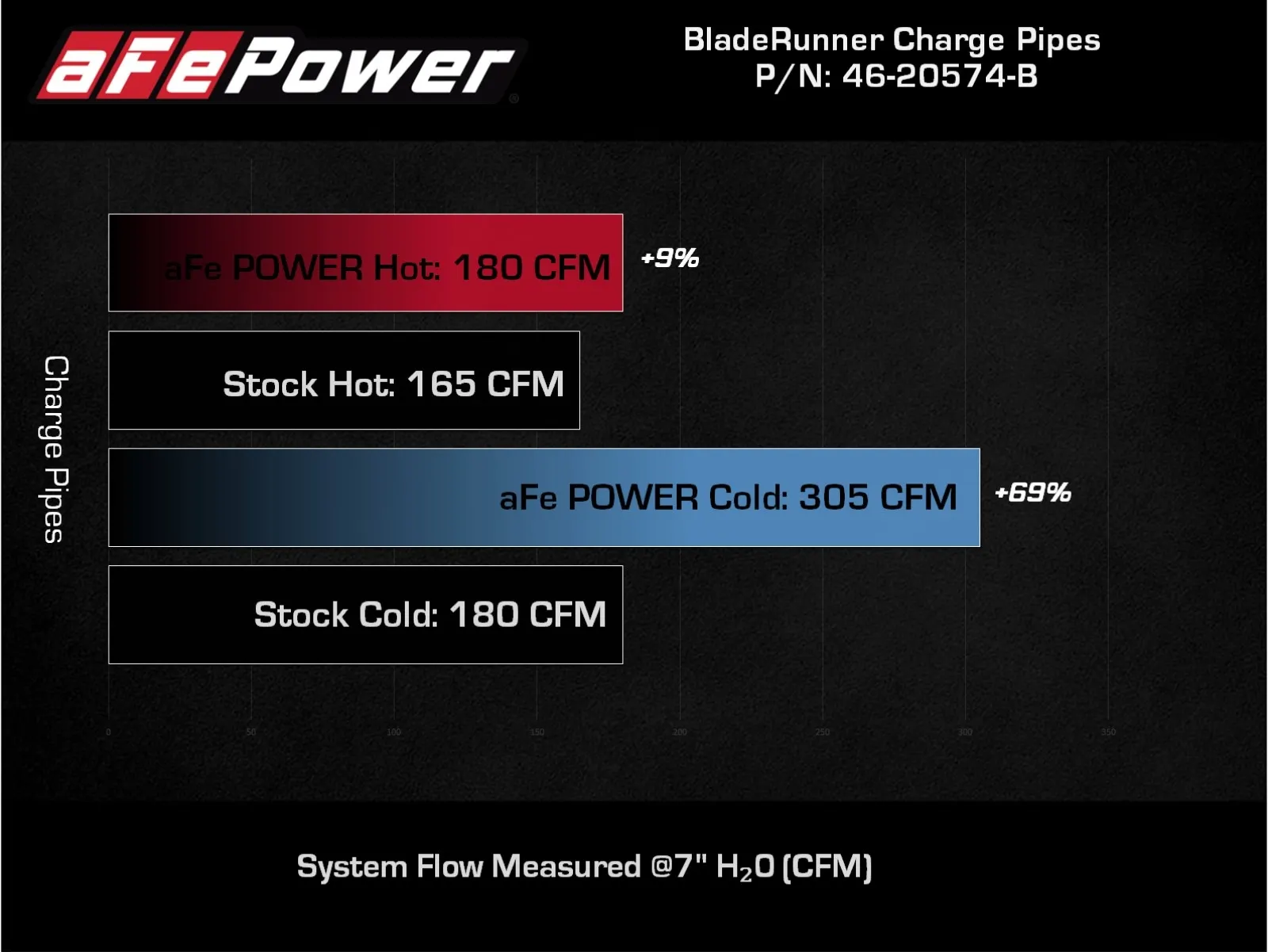
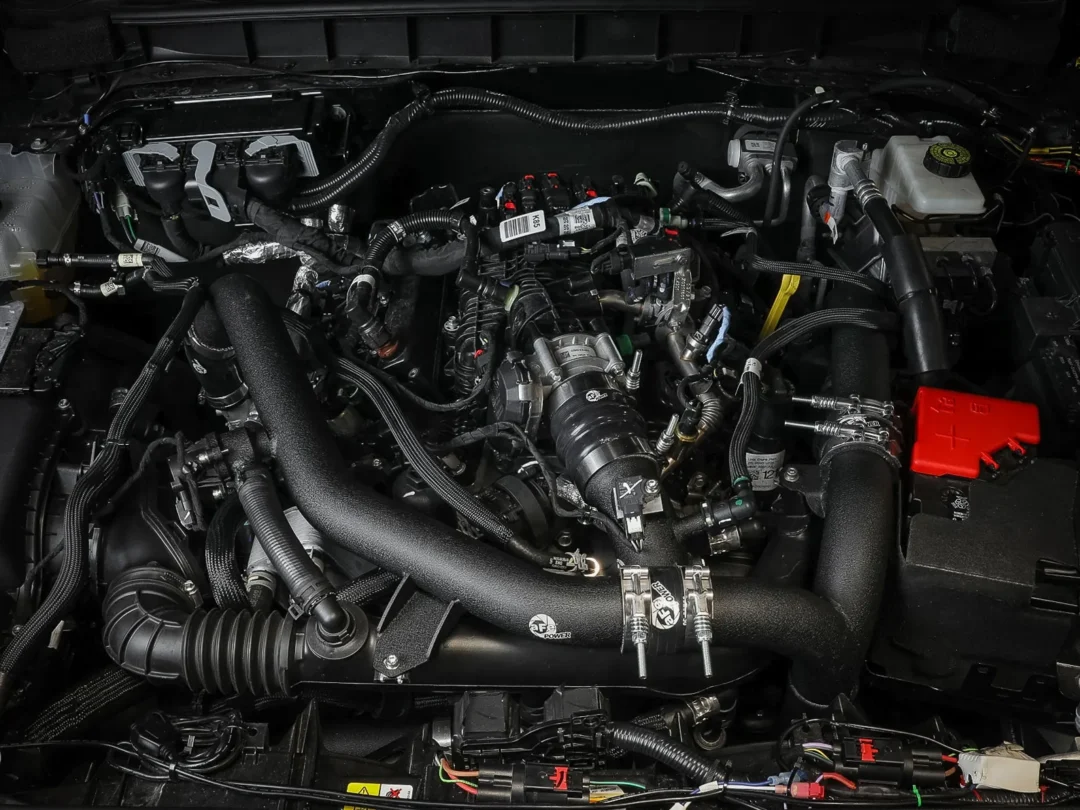
Each application tested for increased airflow. On the 2.3L (t) Bronco, when tested, data shows our Charge Pipes flow up to 9% more on the hot side and nearly 70% more on the cold side compared to stock.
Product Details
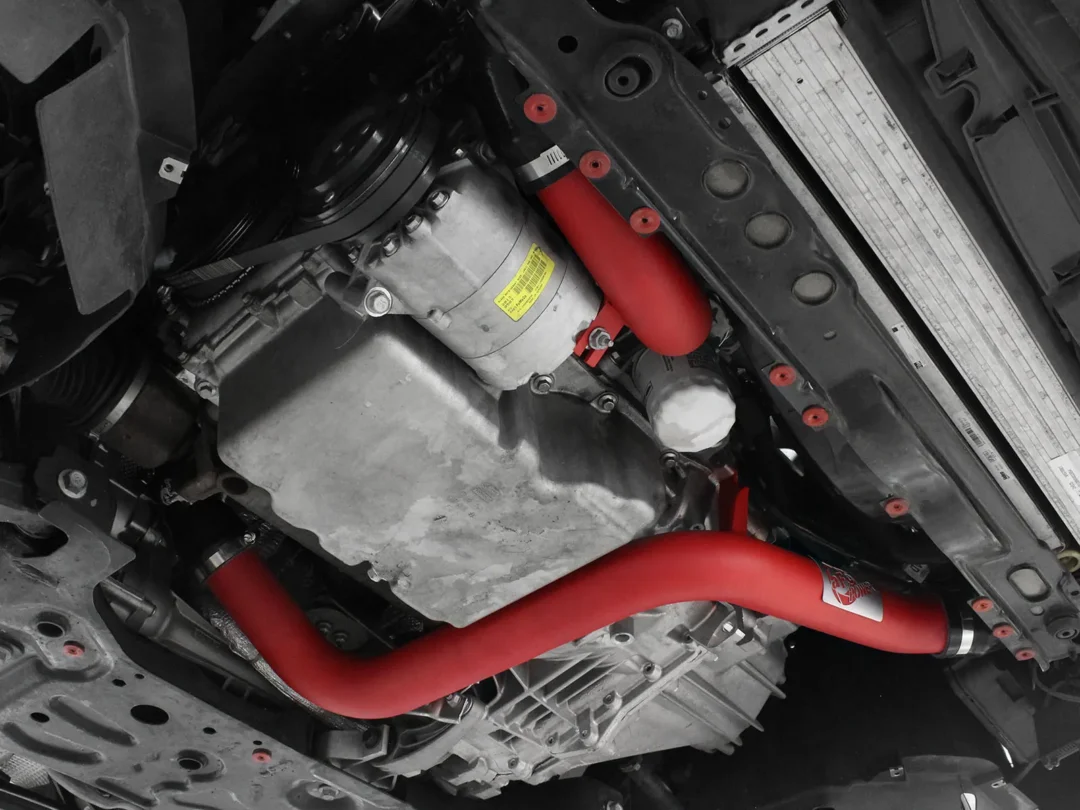
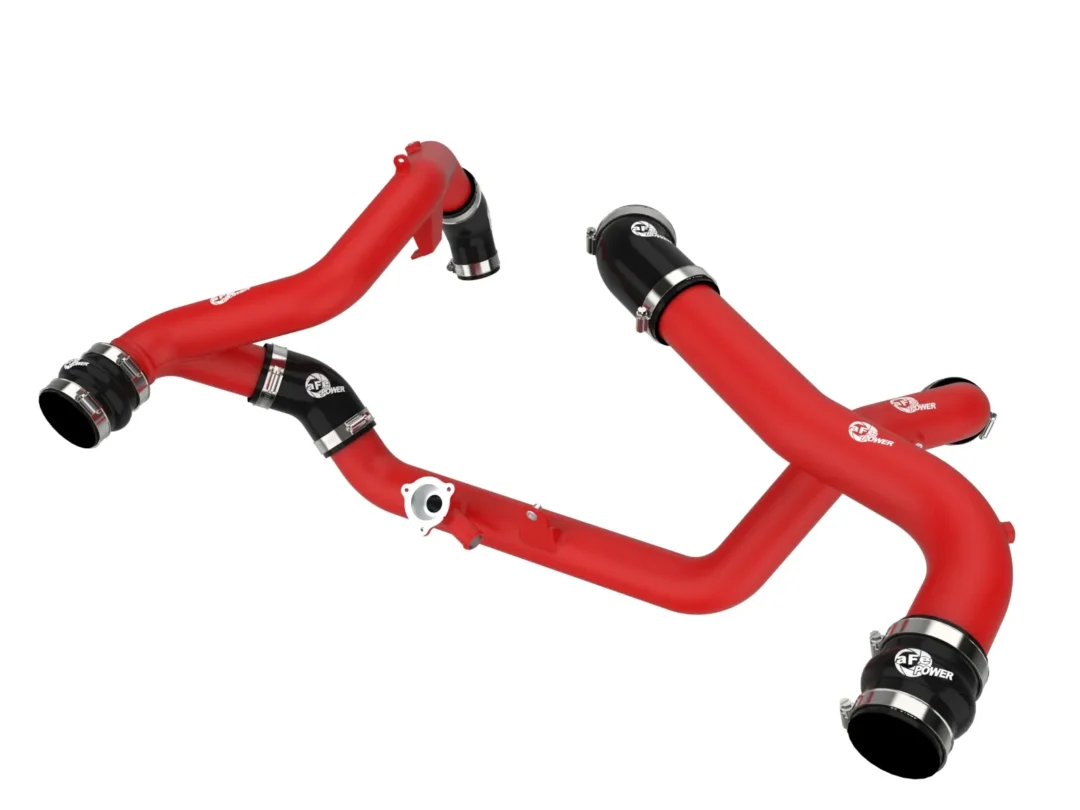
We offer both OE replacement and performance-oriented charge pipes. The OE replacement pipes are raw-finish stainless steel. All performance versions are aluminum—available in wrinkle black powder coat or textured red, depending on your preference. Depending on the application, we offer hot-side, cold-side, or full kits.
Designed, Tested, & Made In The USA
Engineers follow a rigorous R&D process, consisting of taking measurements, CAD design, 3D printed prototypes, and extensive real-world driving. Because of our in-house exhaust fabrication operation, we’re experts in tube bending, manufacturing, and TIG welding. Charge pipe production was a natural transition and is now a core competency.
Couplers and Hardware
Our charge pipes are designed with better-than-factory materials. For diesel trucks, we use spring-loaded T-bolt clamps, but for newer gas trucks and cars, we’re moving to stainless steel SmartSeal clamps. They’re easier to install and prevent over-torquing, which can cause silicone couplers to wear down. Depending on the connection’s location, the included O-rings are made from either Buna or Viton. The use of Viton, for instance, is specifically for areas exposed to high heat, such as turbo connections.
Installation
Installing aFe Charge Pipes is a straightforward job that can be done by any DIY enthusiast with basic tools in about an hour. However, some vehicles may need extra steps (like removing parts of the subframe or fender wells) for better access.
In the box, you’ll receive the tubing, all necessary hardware, couplers, clamps, an instruction sheet, and O-rings. Some parts from the original equipment (OE), like clips for Quick Connect adapters or sensors, may need to be transferred to the new charge pipe. The included instruction sheet offers step-by-step instructions with detailed images. You may also contact Tech Support for additional assistance.
Helpful Tips:
- Clean mating surfaces: Ensure any oil or residue is wiped clean from the mating faces before installation to prevent leaks.
- Proper O-ring installation: Grease O-rings to prevent tearing during installation.
- Clamp placement: Place clamps near the bead of the pipe to prevent slippage and avoid over-tightening.
- Retighten after 50–100 miles: After installation, check the pipes again after a few hundred miles to make sure everything is still tight and secure.
- Avoid over-tightening: Over-tightening risks bending the tube and damaging it, causing leakage later.
Time To Upgrade?

Popular Applications
aFe Charge Pipes are designed for a wide range of vehicles, including diesel trucks, gas trucks, and turbocharged cars. Here are some of our top-selling charge pipe applications:
Top Selling Truck Charge Pipes: